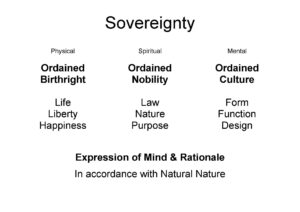

The Principles of Sovereign Autonomy
Developing the Character, Responsibility, and Judgement Required for Self-Governance
Knowledge alone does not create autonomy.
True autonomy develops when knowledge is combined with sound judgement, personal responsibility, ethical conduct, and consistent action.
Throughout the FRRf educational pathway, participants are encouraged not only to understand administrative systems, but also to develop the personal qualities required to engage with those systems responsibly.
These principles provide a practical framework for cultivating that mindset.
They are not rules imposed upon you.
They are guiding principles that support responsible self-governance.
Why Principles Matter
Every successful organisation, institution, and community is guided by principles.
Principles help shape behaviour, influence decision-making, and provide consistency when circumstances become uncertain.
For individuals seeking greater autonomy, principles serve a similar purpose.
They help create clarity between what is merely possible and what is responsible.
Autonomy without principles can become impulsive.
Autonomy guided by principles becomes disciplined, purposeful, and sustainable.
The Principles of Sovereign Autonomy
1. Act with Integrity
Be honest in your words, consistent in your actions, and accountable for your decisions.
Trust is built through integrity, and integrity is demonstrated over time.
2. Accept Responsibility
Autonomy begins with accepting responsibility for your choices, your commitments, and their consequences.
Personal responsibility is the foundation upon which self-governance is built.
3. Seek Understanding Before Acting
Well-informed decisions are usually better decisions.
Develop the habit of learning, questioning, researching, and understanding before taking action.
Competence grows through continual education.
4. Honour Your Commitments
Whether entering agreements, accepting responsibilities, or giving your word, reliability creates confidence and strengthens relationships.
Commitments should be made thoughtfully and fulfilled conscientiously.
5. Respect the Rights and Responsibilities of Others
Responsible autonomy recognises that every individual operates within a wider community.
Exercise your freedoms in ways that respect the legitimate interests, rights, and responsibilities of others.
6. Act with Fairness
Good administration depends upon consistency, impartiality, and balanced judgement.
Seek solutions that are reasonable, transparent, and proportionate whenever possible.
7. Develop Administrative Competence
Understanding how systems operate is one of the central objectives of the FRRf educational pathway.
Administrative literacy enables you to participate confidently, communicate effectively, and make informed decisions.
Competence strengthens autonomy.
8. Practise Stewardship
Whether managing an estate, administering a trust, leading an organisation, or caring for personal resources, stewardship requires thoughtful planning and long-term responsibility.
Good stewardship considers both present needs and future generations.
9. Learn Continuously
Autonomy is not a destination.
It is an ongoing process of learning, reflection, and improvement.
Remain curious.
Remain teachable.
Remain willing to refine your understanding as your experience grows.
10. Lead by Example
The strongest influence often comes through conduct rather than instruction.
Demonstrate the qualities you wish to encourage in others.
Leadership begins with personal example.
Applying These Principles
These principles are intended to support every stage of the FRRf educational journey.
They apply equally when:
- organising personal affairs,
- administering a trust,
- managing an estate,
- participating within organisations,
- making professional decisions,
- serving your community,
- developing long-term goals.
The more consistently these principles are practised, the more naturally they become part of everyday decision-making.
The Journey Towards Autonomy
The FRRf educational pathway is built upon three progressive stages.
Phase 1 – Establish Your Sovereign Standing
Develop an understanding of identity, responsibility, and the distinction between private and public administrative systems.
Phase 2 – Develop Sovereign Competence
Build the administrative knowledge, practical skills, and confidence required to engage responsibly with different institutional frameworks.
Phase 3 – Achieve Sovereign Autonomy
Apply your knowledge with integrity, wisdom, and responsibility, organising your affairs intentionally while contributing positively to the wider communities and systems in which you participate.
Final Reflection
Autonomy is not measured by independence alone.
It is measured by the ability to govern yourself responsibly.
The principles outlined on this page are intended to support that lifelong journey.
As your understanding grows, your competence increases.
As your competence increases, your confidence develops.
And as confidence is combined with responsibility, integrity, and purposeful action, autonomy becomes more than an idea—it becomes a practical way of living.
Ultimately, the goal of the FRRf educational pathway is not simply to help you understand administrative systems.
It is to help you become someone capable of navigating them with wisdom, responsibility, and intention.
—-
“Historical Maxims of Equity: A Study Resource.”
There are 20 Equitable Maxims, aka the Maxims of Equity to consider. We have listed them here, but we suggest that you to take the time to research them, as you will find more detailed explanations and descriptions of them online. Our modified version is as follows:
01 Sovereignty sees that as done what ought to be done
02 Sovereignty will not suffer a wrong to be without a remedy
03 Sovereignty delights in equality/Equality is equity
04 One who seeks Sovereignty must be an embodiment of Sovereignty
05 Sovereignty aids the vigilant not the indolent
06 Sovereignty imputes an intent to fulfil an obligation
07 Sovereignty acts in personam and not in rem
08 Sovereignty abhors a forfeiture
09 Sovereignty does not require an idle gesture
10 He who comes into Sovereignty must come with clean hands
11 Sovereignty delights to do justice and not by halves
12 Sovereignty will take jurisdiction to avoid a multiplicity of suits
13 Sovereignty follows the law
14 Sovereignty will not assist a volunteer
15 Where Sovereignties are equal, the law will prevail
16 Between equal Sovereignties the first in order of time shall prevail
17 Sovereignty will not complete an imperfect gift
18 Sovereignty will not allow a statute to be used as a cloak for fraud
19 Sovereignty will not allow a trust to fail for want of a trustee
20 Sovereignty regards the beneficiary as the true owner of property.